Out There and Behond Weliington: Te Raekaihau Reserve and Point

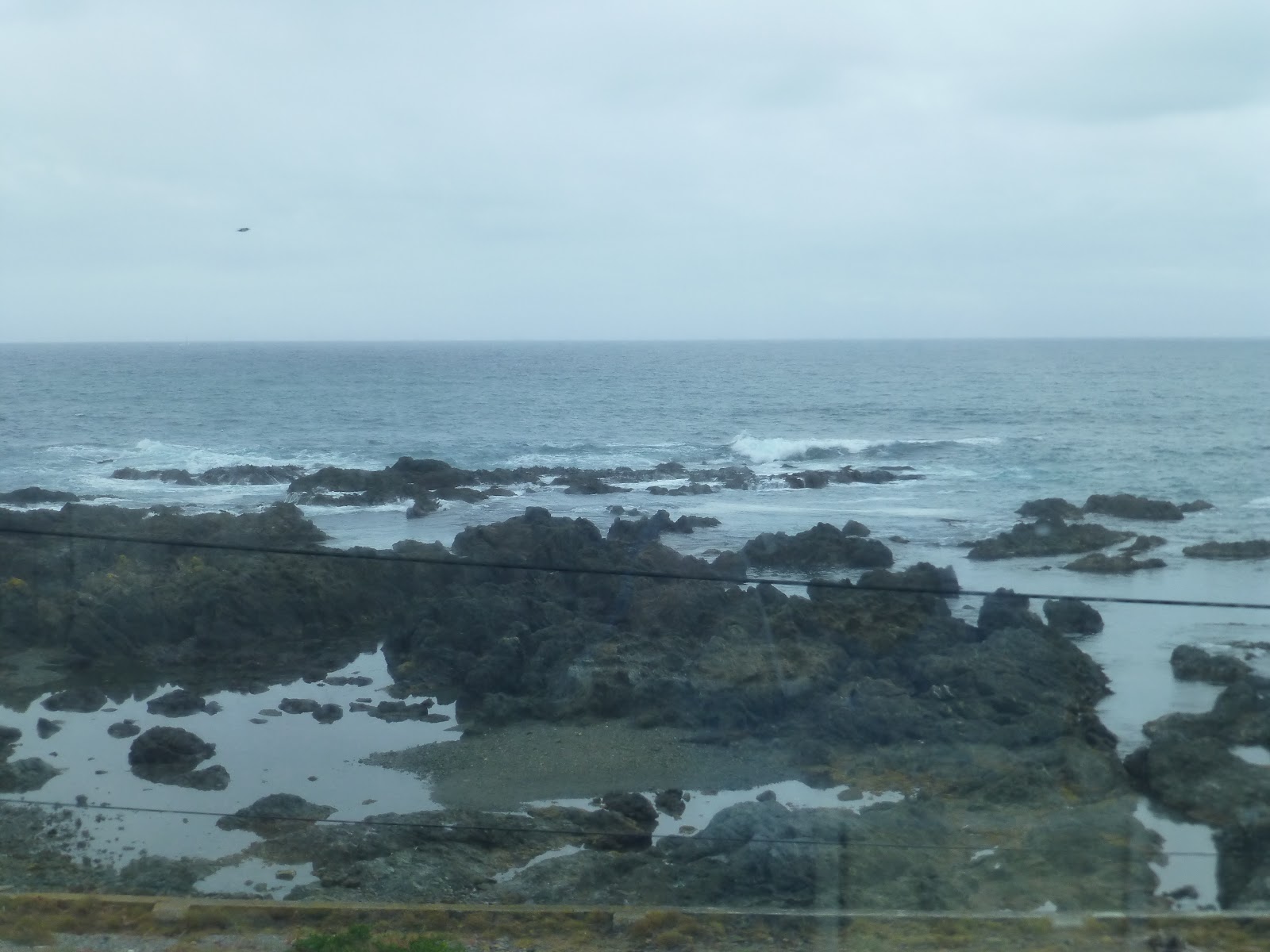
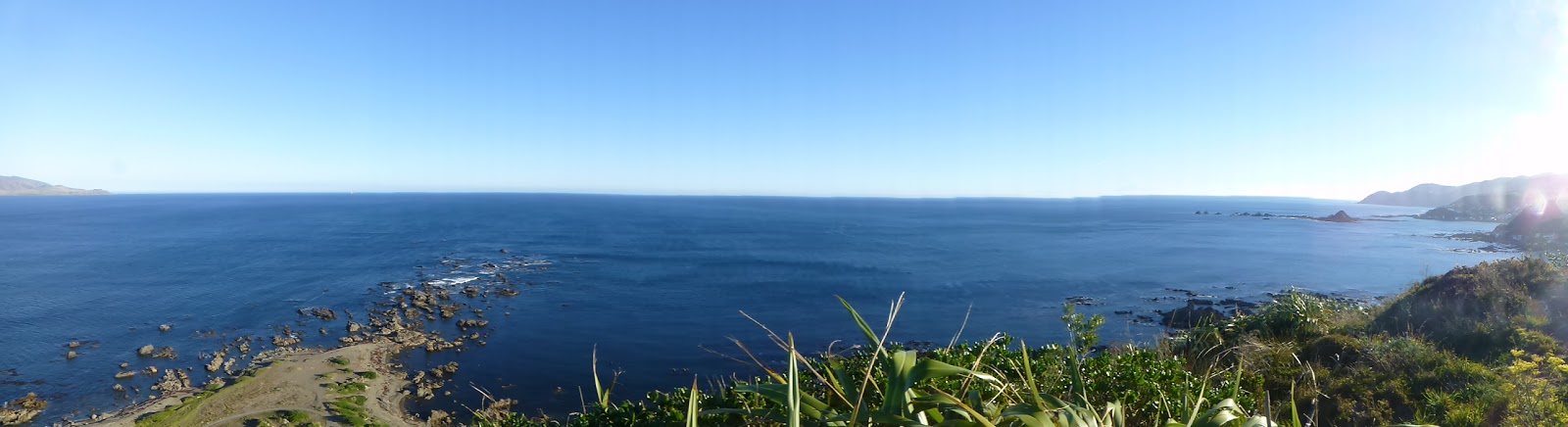
 The Te Raekaihau Reserve (The Headland that eats the Wind)  is a headland that is located along the rugged south coast of  New Zealand’s North Island. It sits over looking the Cook Straits between Lyall Bay and Houghton Bay.
 In the terms of age,it is very young having been raised up by around 3 metres as recently as 1855 during the earthquake in The Waiarapa.

  The reserve has always been popular for those wishing to enjoy the unspoilt area and is often used by people wanting to point or take photographs as its one few area within Wellington that is accessible but has very little light pollution. This low light pollution has made it possible for the Aurora Australis to be viewed from here on occasions.


 The reserve gives excellent views of Lyall Bay,Houghton Bay,Island Bay as well as Red Rocks further along the coast.
 Although small in area there are a number of tracks that wind there way from the coastal road up to View Road.
 There are a number of steep although short sections but recently work has been completed to add steps which will make the area more accessible.
 There is a great viewing area where you can sit and enjoy the views and to watch the world go by.
 Over time a lot of work has gone on in the area to ensure that only native plants survive and with this goes the beauty that it deserves.
 Random seats including a old blue metal ones are located around the area with some almost hidden.

 In 2007 the Environmental Court turned down  an application to build a Marine Conservation Centre on the Te Raekaihau Point which sits below the Reserve.

  The area is also a great place to catch some stunning sunsets from either Princess Bay or at the top of the reserve.

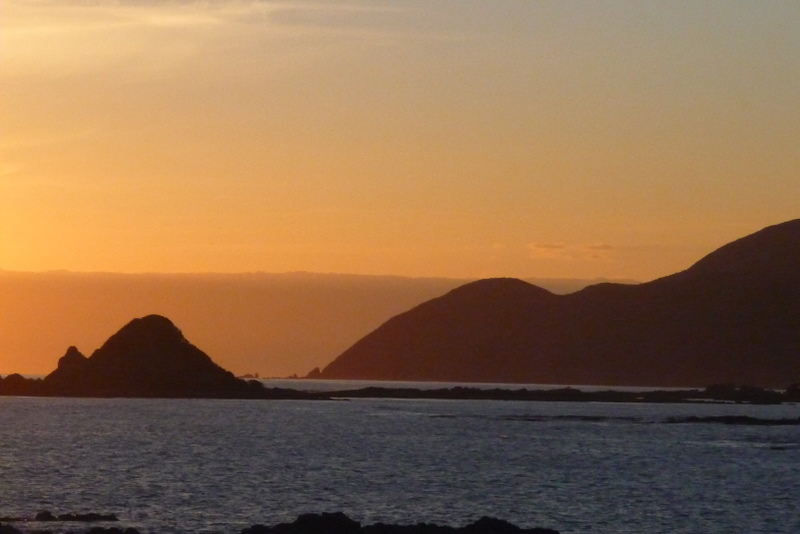
 The point was not in its original state as the parking area is a result from road buildings and other work.Whilst over the years non native plants invaded the area.
 It was back on 2010 that Wellington council start to improve the area which included reducing access to cars,clearing the non native plants and replanting of over 2000 native plants.
 Also an upgrade to the changing rooms at Princess Bay has been completed.
 Most of the money for this came from The Plimmer Bequest.

View Te Raekaihau Reserve in a larger map

james/wildbaynz/windyhillflyingclub
Wellington’s Relay for LIfe. 23rd and 24th March 2013

Celebrate, Remember,Fight Back.
  Over the Weekend of 23/24 March 2013, Wellington’s Relay for Life took place at Frank Kitts park with its views of Wellingtons Harbour.
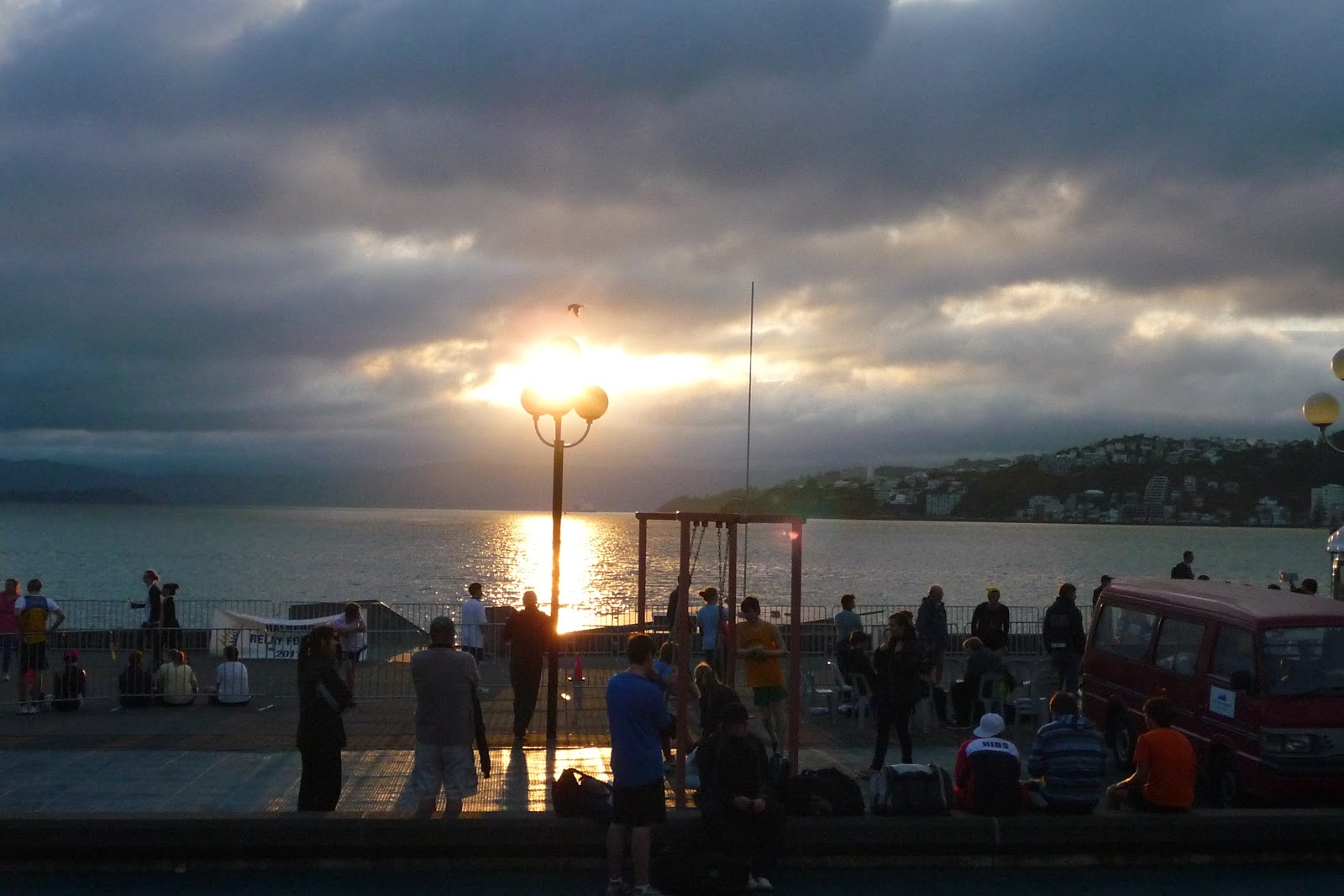
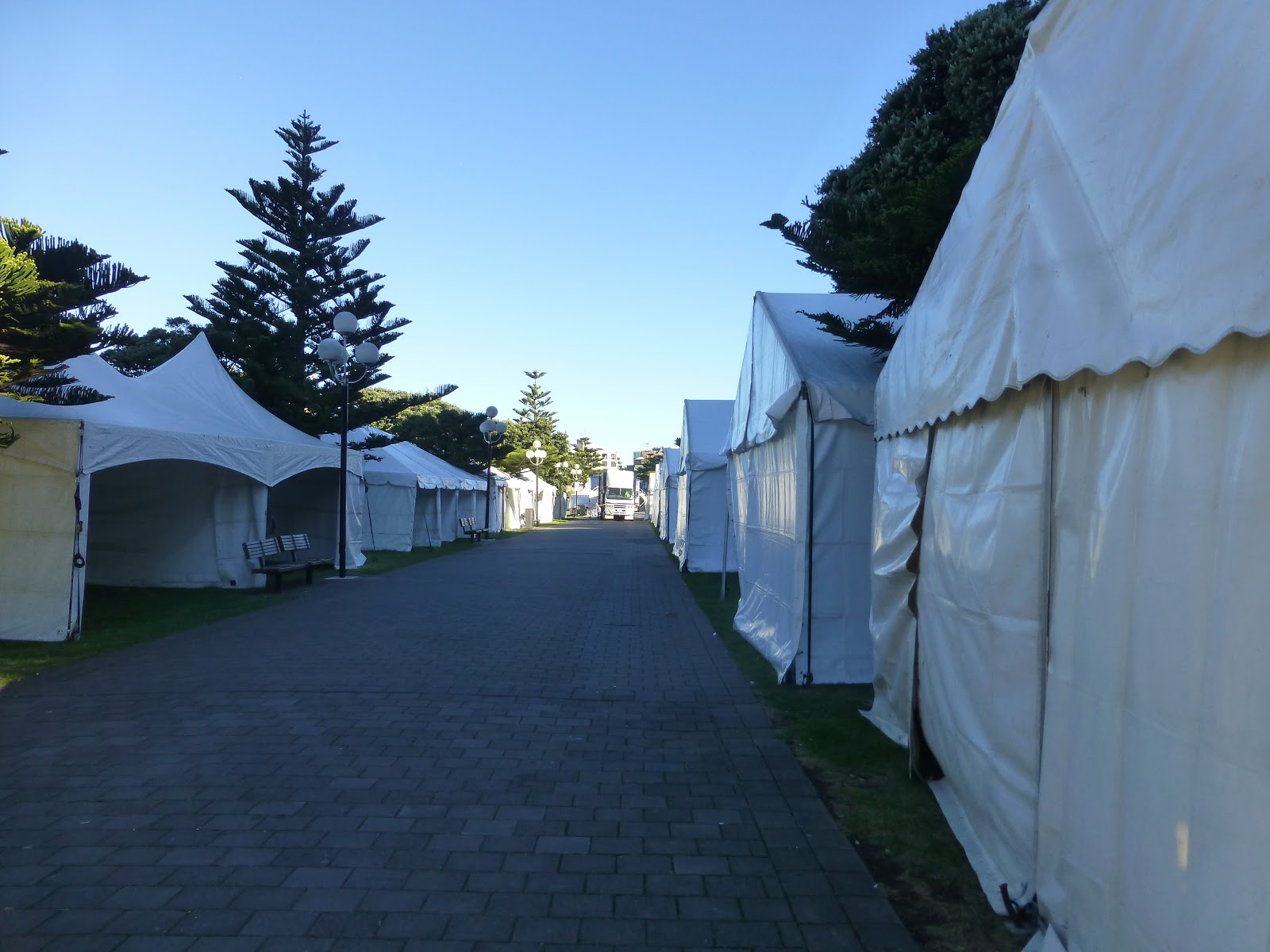
 On the Friday night the tent village  was looking very eerie and it was giving very little away as to what would be happening over Saturday through to Sunday Morning.
 A few contractors were finishing unloading the last few items and the frame for the video screen was being installed.

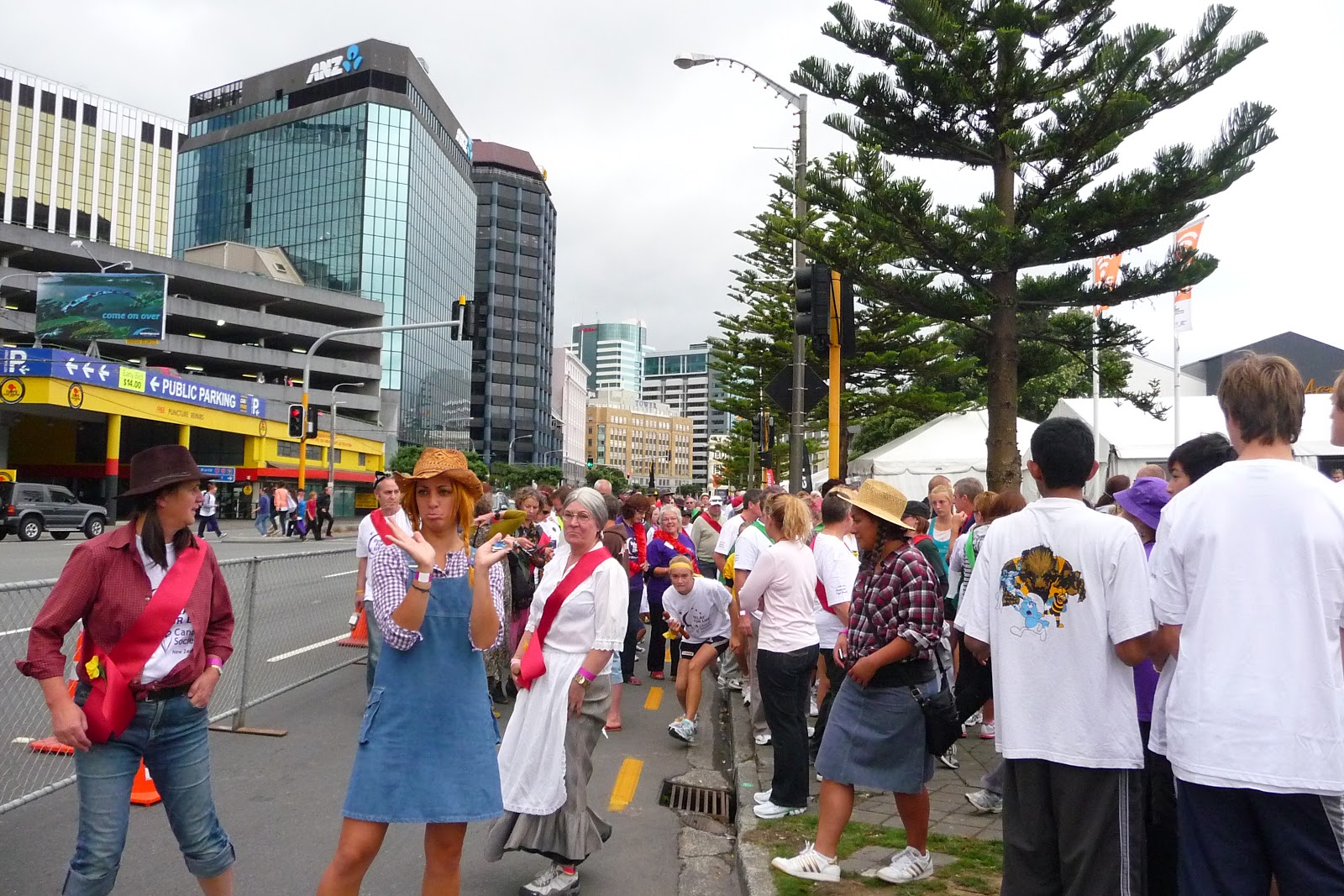
 By mid morning on the Saturday the 1st few people started to arrive, carrying chairs,chilly boxes and assorted bedding.
 Within a couple of hours the tent village was bustling with groups which included schools, business’s, sporting groups or just family’s.
 Each groups had  tent allocated to them and each group spent time setting their tents up with bedding, tables and ensuring that the cooking unit was working.
 Many of the tents were decorated or had photos of those that they came to remember.

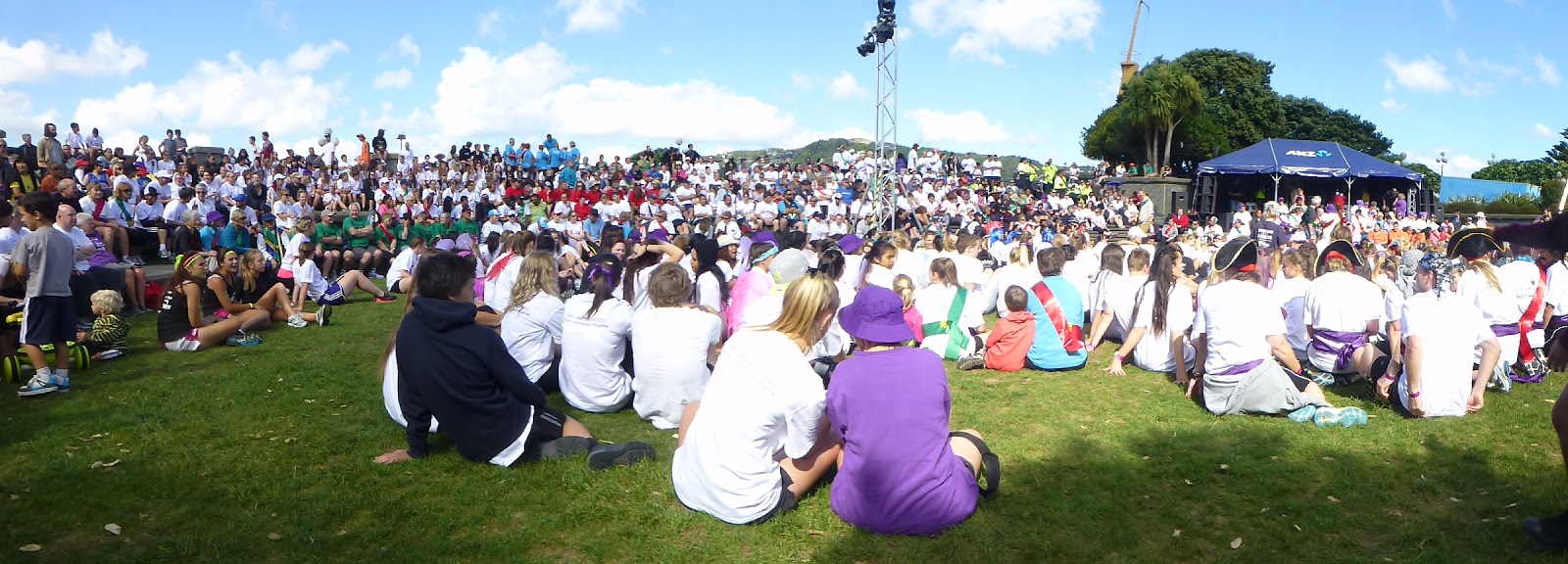
  Almost out of now where a good number of the 2500 that had registered plus those helping headed to the centre of the park for the opening ceremony.
 The whole central area filled quickly and there was not much room left to sit in. The opening ceremony started with a number of speakers welcoming people and reminding why they were there ( not as though they needed reminding.)

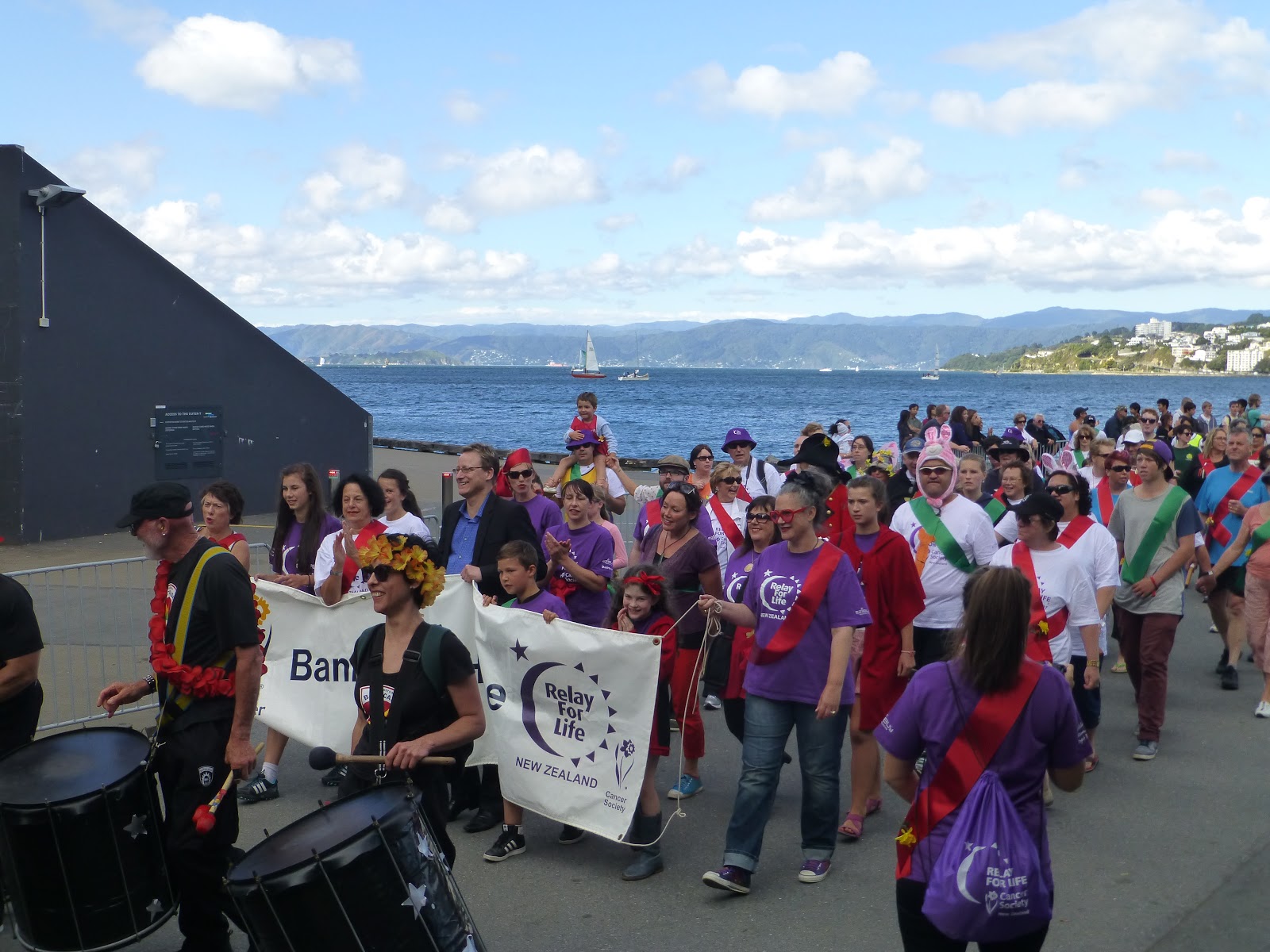
 The opening lap was at 4.00pm with Wellington Batucada leading the Survivors group around the course.
After that it was all go for the teams to either walk the course or for the younger ones a running track.
 As dusk turned to night the candle ceremony started.With many of those not doing the course assembled in the centre of the park. Weaving passed the stage a long queue waited their turn to place a white bag on the steps that lead up to the wall that overlooks the harbour.
 Each white bag had a small night light inside whilst on the outside of the bag, a picture of a love one who lost their life to some form of cancer.

 These bags would stay on the steps until 06.30 the following day keeping the light going through the darkness of the day.
 At 6.30 the bags would be taken away to be cremated and the ash was place round the Rose of Remembrance at Mary Stewarts Hospice,Ridderford Street,Newtown,Wellington.
 It was a opportunity for some to share their stories and to remember those still fighting Cancer and also those who care for those that have it.
  For many, a quiet tear was shed. Sitting near the candles a group of teenagers quietly sat listening to the songs and speeches. It was not till near the end did they start to cry,with each other comforting.
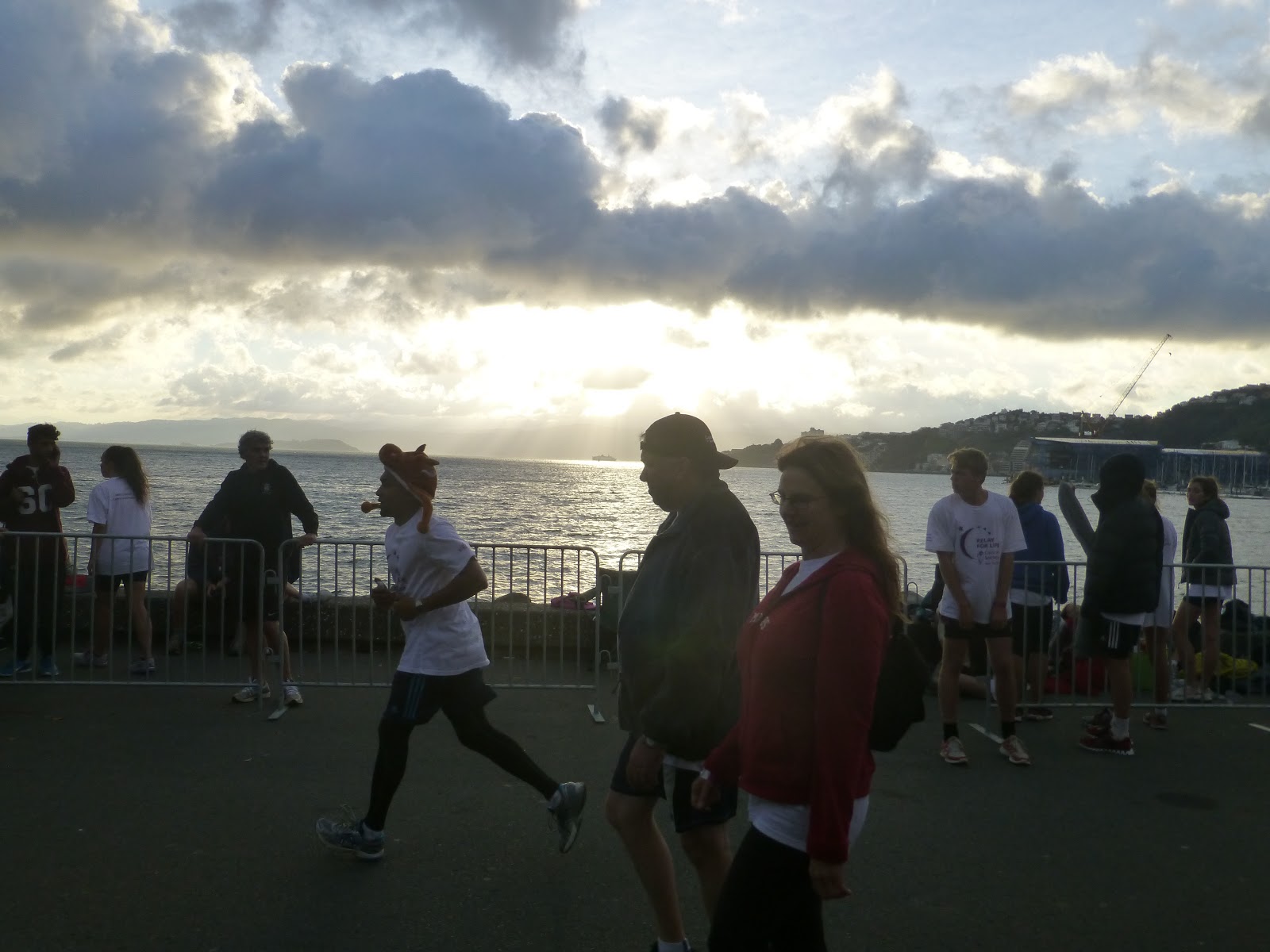
 With the sun rising  on the Sunday Morning  the course was still well in use, with many still showing a lot of energy whilst some were looking worse for wear.
 With the final laps being completed around 08.30 it was time for the thank yous and for 3 teams to find out they completed over 500 laps.
 It was never about who completed the most or quickest laps  but to make people aware that 1 in 3 people in New Zealand have some form of cancer.
 Its not until an event like this then did i realise that a number that i know either from work or elsewhere were affected somehow by cancer.
 The money raised would provided services that is not funded by central government.
  The end arrived with a Haka preformed by Rongotai School,at which every one headed home for a well earned shower and sleep.

Relay for Life NZ Main Web Page

Cancer Society New Zealand

james/wildbaynz/windyhillflyingclub


Out There and Beyond:Wellington’s Hidden Art:Life Stream

Life Stream
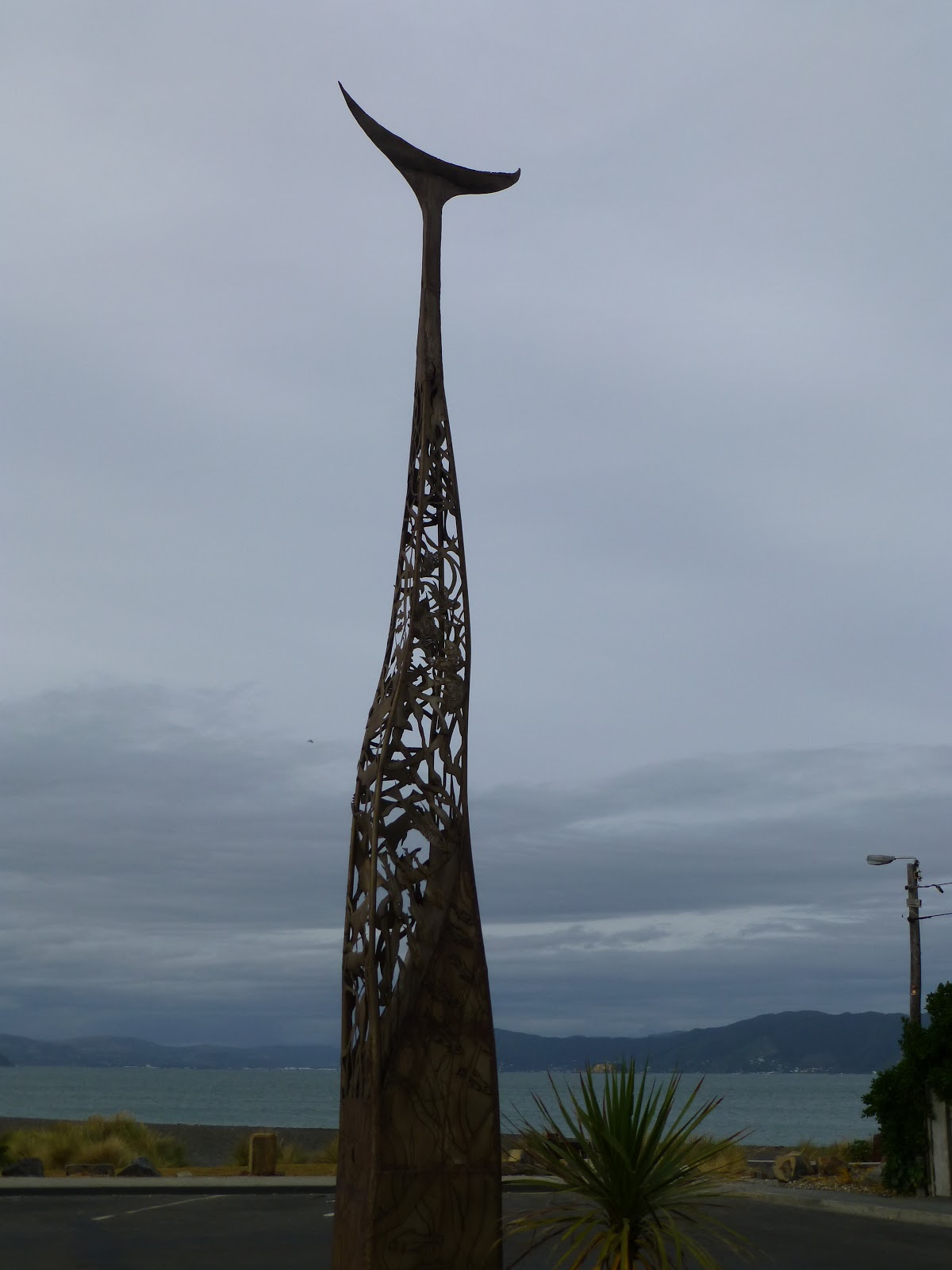
Located in Seatoun at the bottom of Dundas Street.(Near Churchill Park) it has a uninterrupted view of Wellington Harbour and Somes Island.

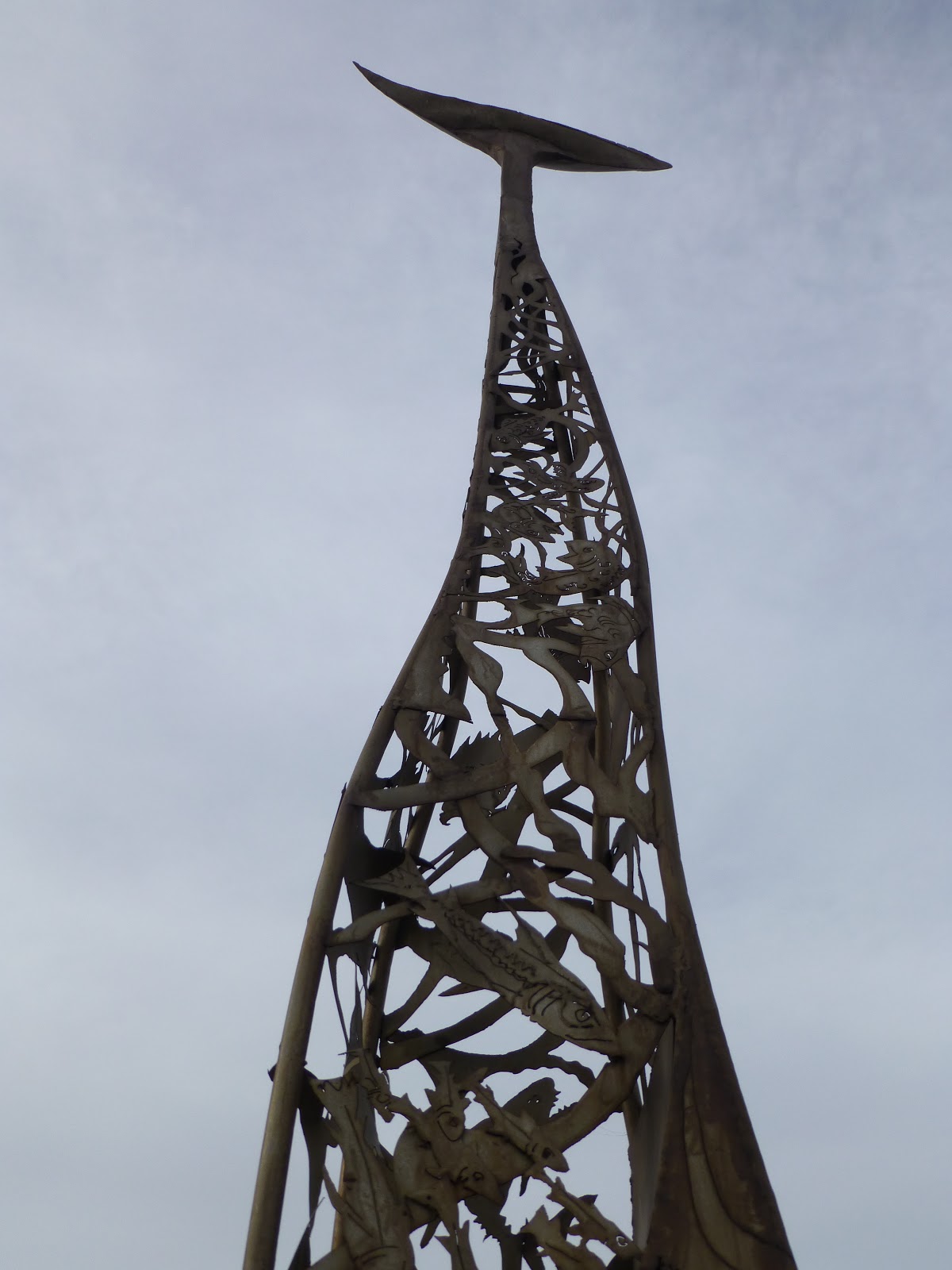
 The sculpture is almost 6m high and made of stainless steel.It represents a that of a tail of a fish on top of a column of seaweed.
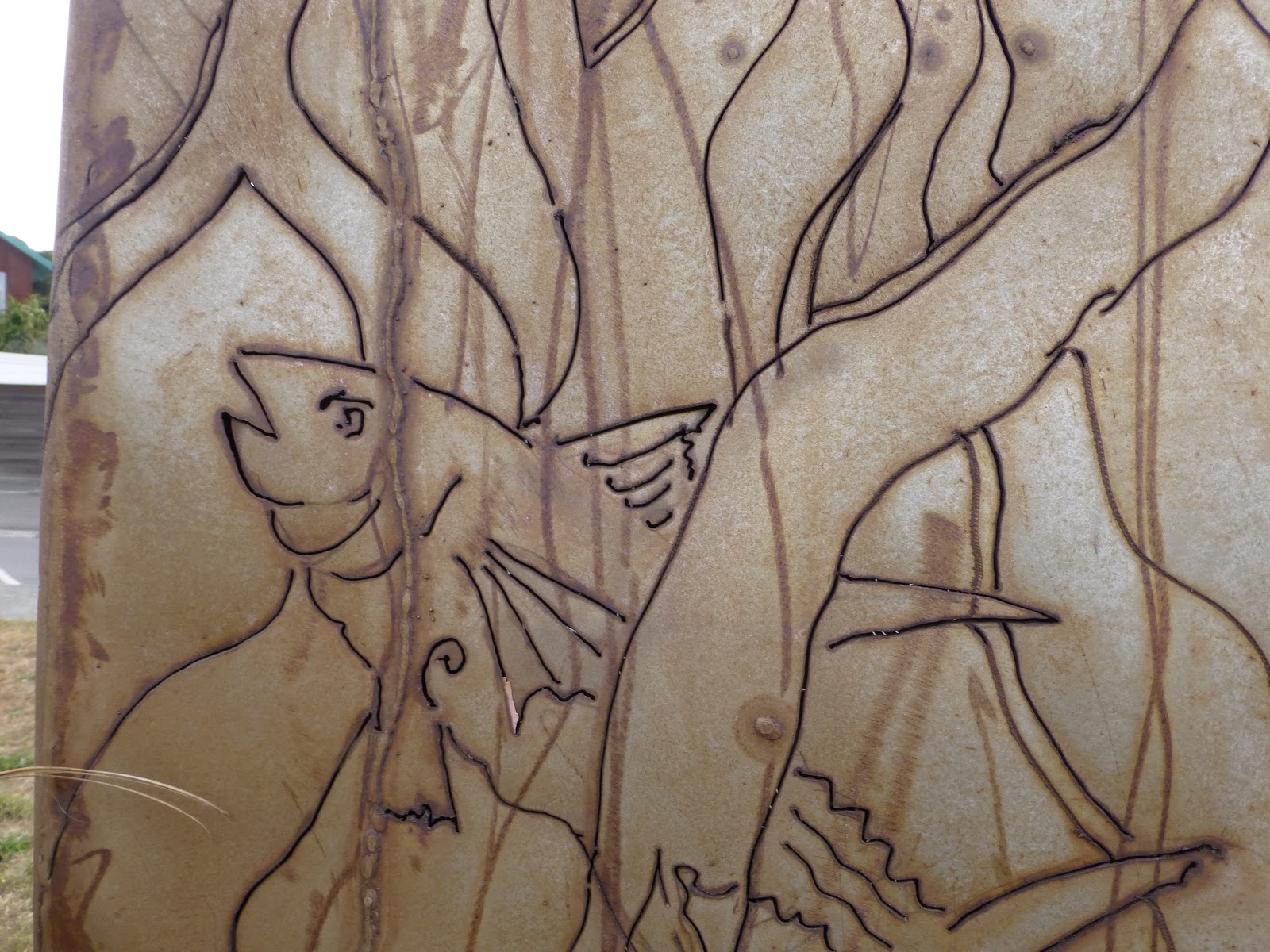
 The base of the sculpture has fish drawn into the metal whilst the rest of it shows fish swimming through seaweed.

 The sculpture is memory of former residents Noyal and Bruce Brown who spent their childhood in Seatoun in the 1950’s.

Life Stream was completed in 2005 by Roger Thompson who is based in Greytown Wairarapa.
james/wildbaynz/windyhillflyingclub
 

Relay For Life: NZ and Worldwide.

Cover photo

A Brief History:
 Relay for life operates worldwide with the aim to continue the fight against cancer as well to remember those who are fighting against it and those family members who are supporting.As well as raising money.
  The very 1st event started in 1985 and was held in Tacoma, Washington,USA .On that event 27000USD was raised.
 Since then over 3billion USD has been raised with the event being now held on over 21 countries.

Different countries operate the event slightly differently but generally the events operate over a night and could last up to 24 hours.
 Teams are made up of around 10 to 15 people with at least one person from each team walking/running the course.
 Each event has a survivor lap and the final lap where all teams take place.


Relay for Life NZ.

 The 1st Relay for Life in New Zealand started in 2001 and was held in Palmerston North. Since then the even has grown since then involving a number of communities and currently this stands at 22.
 The events in NZ take place at different weekends, so checkout the Cancer Society’s web page below for details.


 After the opening lap there comes the Candle Ceremony which is held at dusk. This is to allow time for loved ones to be remembered and others who have been affected by cancer. Candle bags are placed around the track and else where around the course.
 As a reminder that cancer does not sleep team members continue throughout the night, whilst other activities continue through the night.


 At the closing ceremony all the teams get together to complete the final lap.

 Relay For Life enables communities to:

  • honour cancer survivors and caregivers.
  • remember the people we’ve lost to cancer.
  • educate people about detecting cancer early.
  • educate people about ways to reduce the risk of cancer.
  • recruit new volunteers for the Cancer Society’s local programmes and services.

NZ Cancer Society Facebook

Relay for Life Main Site.

Information from Relay for Life Web page.
Pictures from Wellington 2011 by WildbayNZ

james/wildbaynz/windyhillflyingclub.


Neigbours Day Aoteroa

 Home
  Neighbours Day Aoteroa started back in 2009 in Auckland. It was 2 years later in 2011 that it became nationwide.

 The idea is simple. It is about turning strangers into neighbours and streets into neighbourhoods / Atawhaingia te Pa harakeke. It’s about thousands of kiwis taking the time to engage in small and local acts of neighbourliness, over the course of one weekend.
 It was a lady called Rebecca Harrington was asked by Lifewise and Takapuna Methodist Church to find ways to reconnect with each other.

 European Neighbours Day was launched in Paris on the 1st of June 2000 with other countries celebrating until September.

Read the stories on their FaceBook page or the web page. Get some ideas, then sign up and get involved. .

http://www.neighboursday.org.nz/about-us

Neighbours Day Twitter

Neighbours Day Facebook

World Neigbours Day

Life Wise
* Above info taken from their web page or facebook page.
james/wildbaynz/windyhillflyingclub

Out There in Wellington: Dragon Boat Racing

 Wellington’s Dragon Boat Festival is the largest of its type in New Zealand which started in 1985.
 With teams from New Zealand, Australia as well as teams from schools and business.The event occurs over one weekend in March.
 It started as a corporate event but it did not take long for it to expand to its current format.Teams are allowed 8 training seasons beginning in Dec and end before the event.
 There are over 80 teams taking place over the weekend and there are many grades ensuring that many will walk away with a prize.

 The course is situated in front of Frank Kitts Park. It is 320 metres in length and 50 metres out from the shore.All the teams enter the boats in Aotea Lagoon which is located behind the Boat Shed and then they enter the harbour underneath the foot bridge.

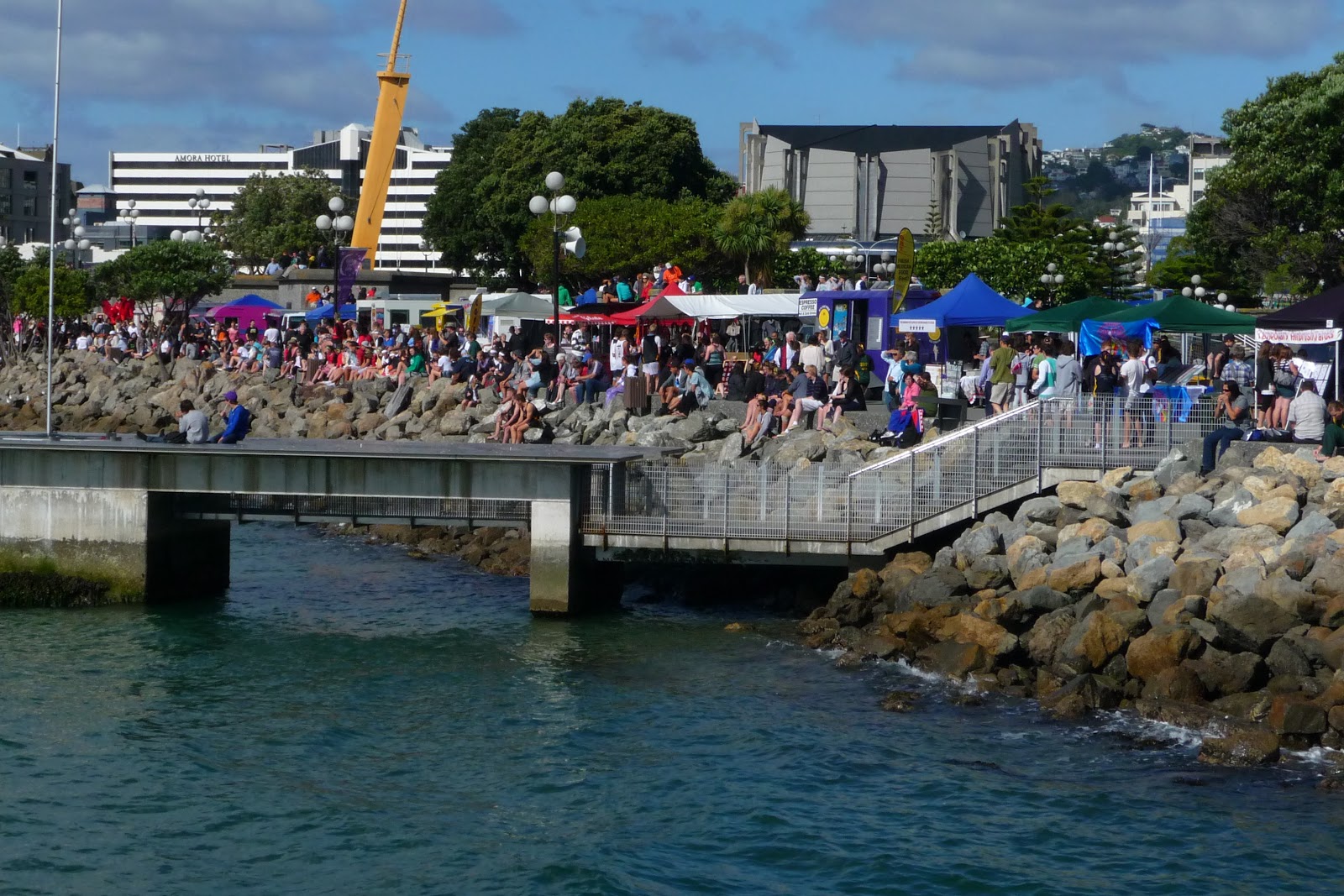
 As part of the activities a number of land based activities take place including stalls and entertainments for the expected crowd of thousands  and those teams waiting to take part.

 Saturdays racing are for the corporate and sport teams as well as the adult teams whilst Sunday is for the school teams.
 Each boat has 20 paddlers one person who stands at the back-called a sweep-and a drummer who sits at the front.

Dragon Boating involves 20 paddlers in one boat, a sweep who stands at the back to steer the boat and a drummer who sits on the front

 Wellington held the Club Crew Championships in 1992


A Brief History:
 According to legend the Chinese Statesman Chy’n Yuan drowned himself in the Mi Lo river in protest over the corrupt regime of the Ch’u Dynasty back in 400BC.
 The local fishermen went out in their boats to save him but were too late. They started to beat their paddles onto the water to prevent his body being eaten by fish.Also rice was thrown into the water as a sacrifice to his spirit.

Local fishermen raced out in their boats to save him, but were too late. To prevent his body being eaten by fish they beat their paddles furiously on the water and threw rice as a sacrifice to his spirit.
Today we commemorate his death each year by racing at the spectacular Dragon Boat Festivals that happen around the world.
*Information taken from Dragonboat.org.nz

Dragon Boat Main Web Page 

Wellington Dragon Boat Facebook Page

Wikipedia Dragon Boat History

james/wildbaynz/windyhillflyingclub
Out There in Wellington. Kilbirnie Festival

 The Kilbirnie is one of tte largest community events,. It started back in 1995 and has been proved to be successful every since with around 40000 people visiting during the day.

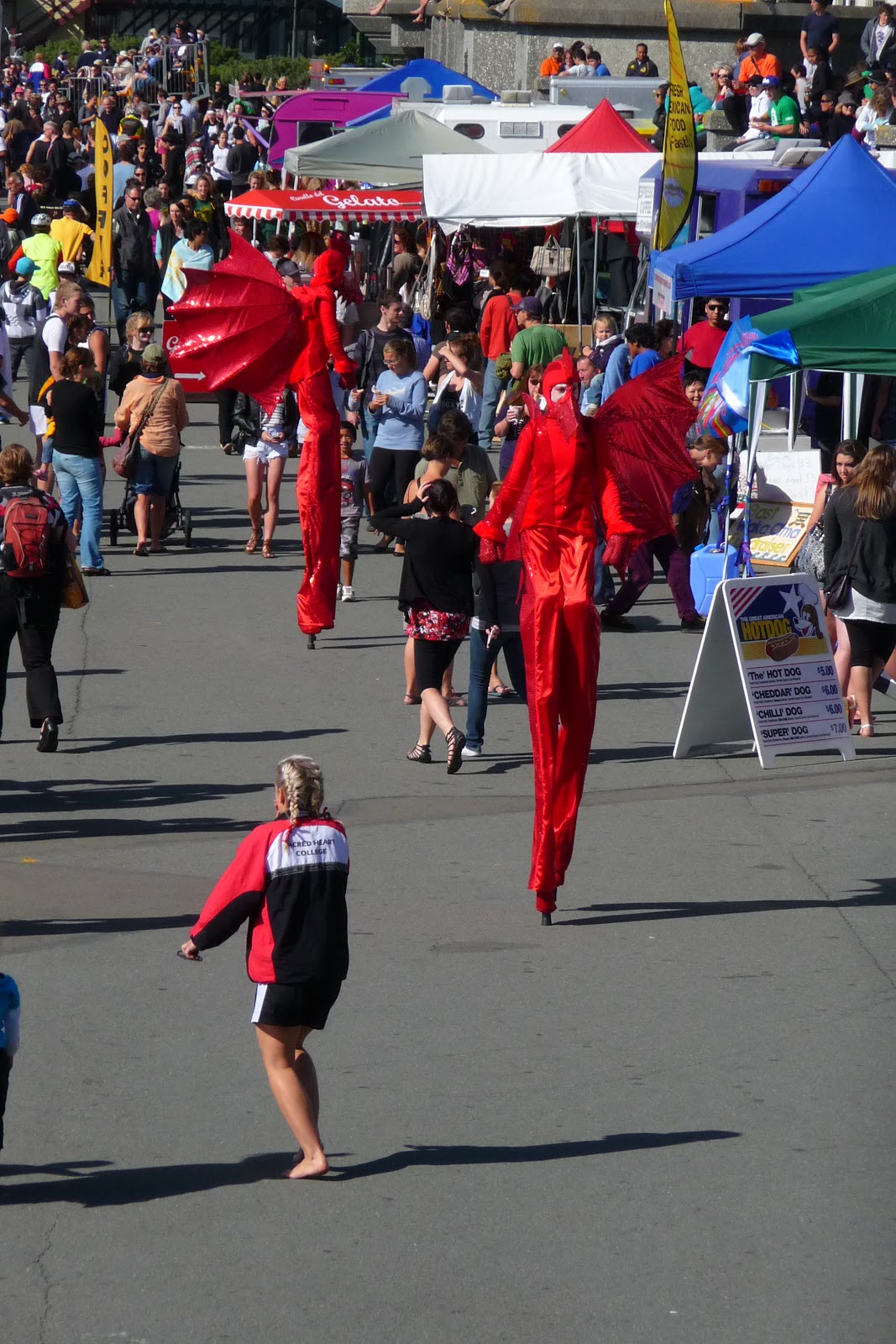
 With hundreds of stalls selling art,crafts and food as well as local community groups giving those who visit a chance to see what as a community has to offer.

 As with any event like this there is a area for the youngsters as well as areas for performers to entertain. The most popular stage is the main stage located with the junction of Rongotai Road.


 It is always held around the 2nd weekend in March (Sunday) and opens from 10am to 4pm


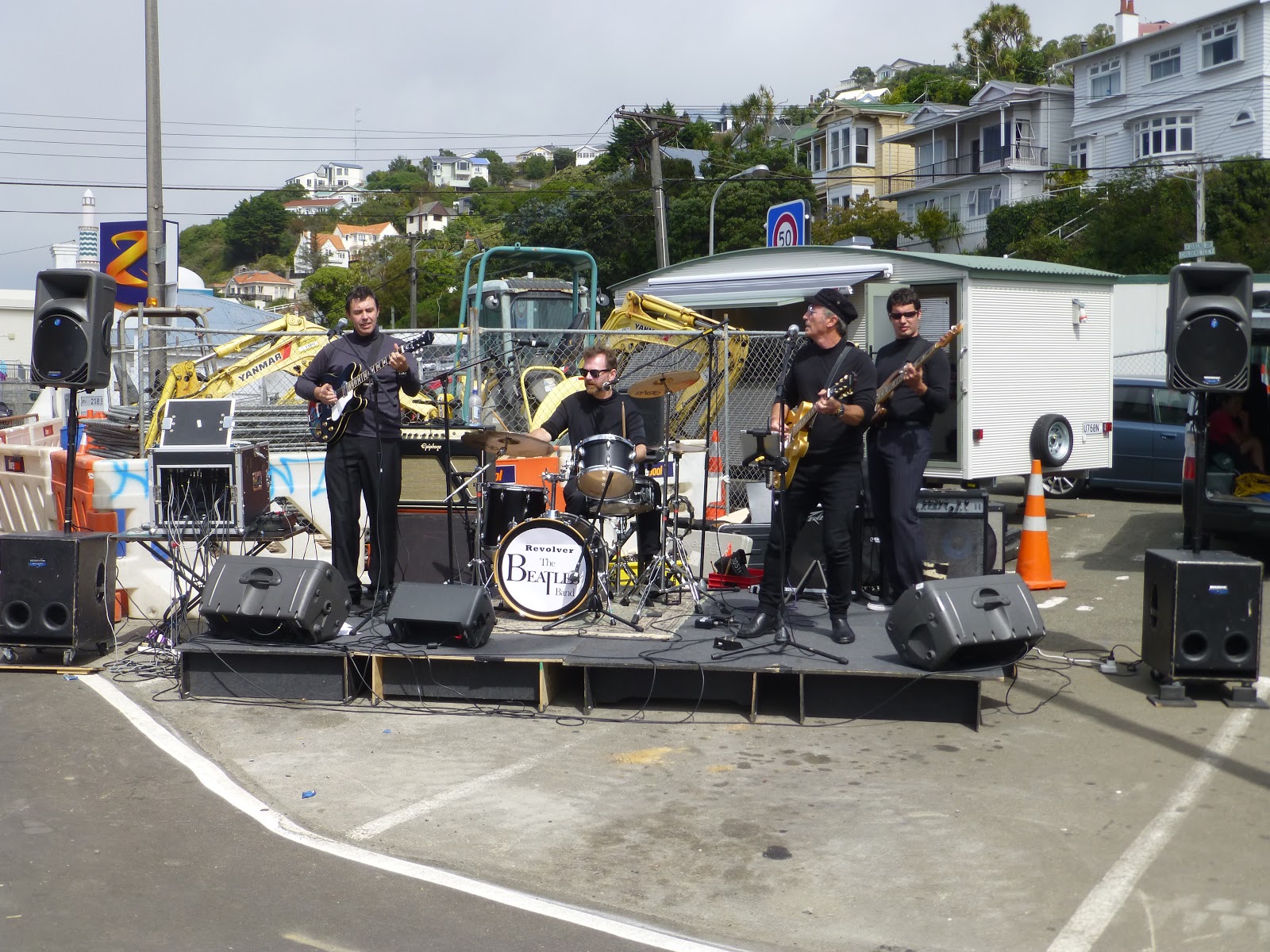
A Storm Trooper and the Local Zumba teachers enjoying the sounds the Beatles Tribute Band Called Revolver
Pictures from 2013
james/wildbaynz/windyhillflyingclub

Out There in Wellington;Hidden Art:Pottery Lamp;Wellinton Botanical Gardens

 Near the scented garden at Wellington’s Botanical Gardens is a lift. This lift takes you up to the The Tree House.
 Located to one side of the doors is a piece of art called The Pottery Lamp which was designed by the artist Roy Cowan.
 This piece was donated to the Botanical gardens by Winsome Shepherd who was a  founder member of The Friends of Wellington Botanical Gardens.

 Also located on the wall behind the Pottery Lamp are a number of clay tiles.. The tile are in memory of Betty Campbell for who work with groups who seeked to promote social well being of Wellingtons residents. She was a councillor between 1968 and 1983.

Wellington Botanical Gardens

james/wildbaynz/windy hill flying club.

Coastal Ecology Lab (Vic Uni) NZ Open Day 2013

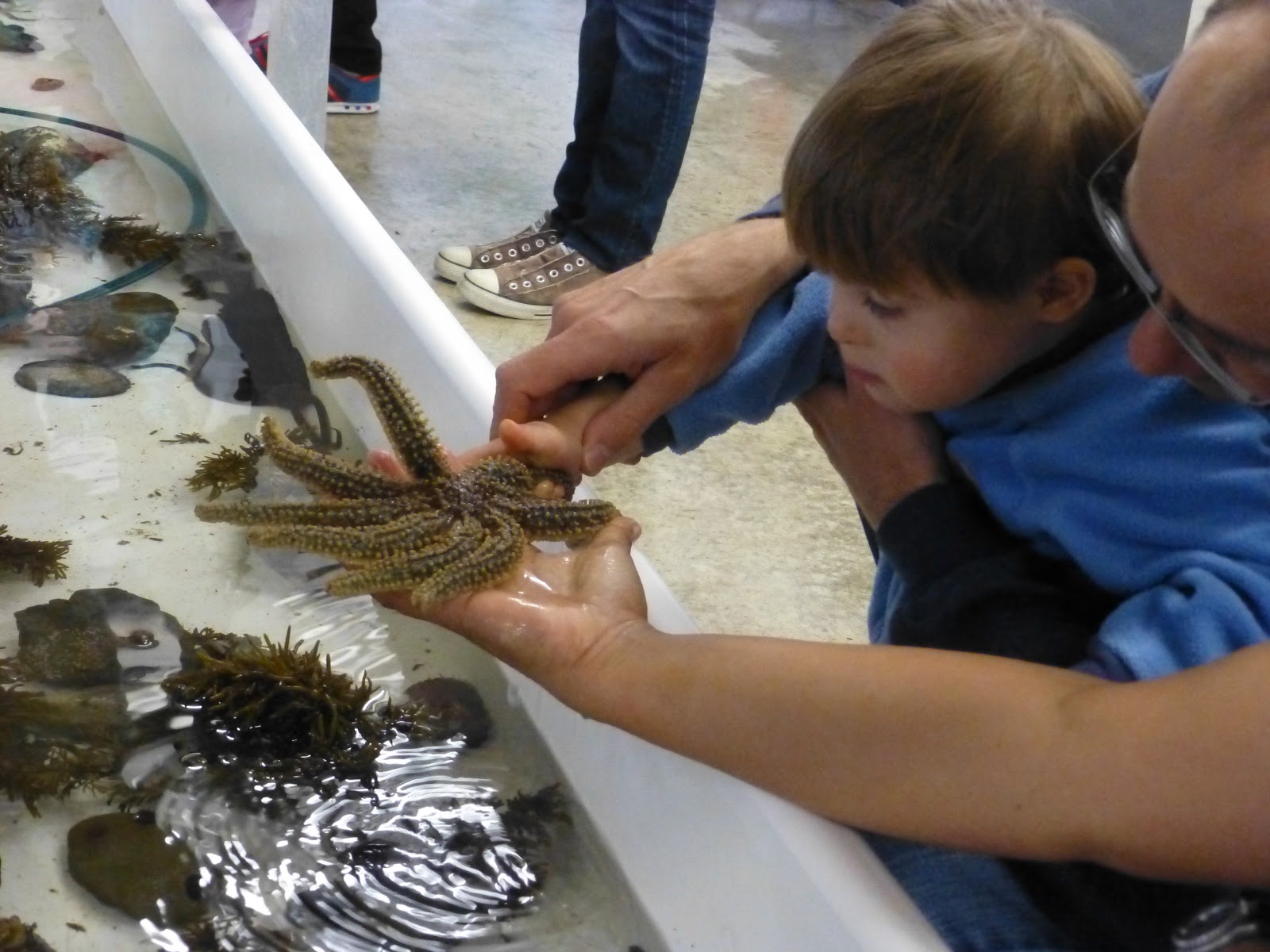
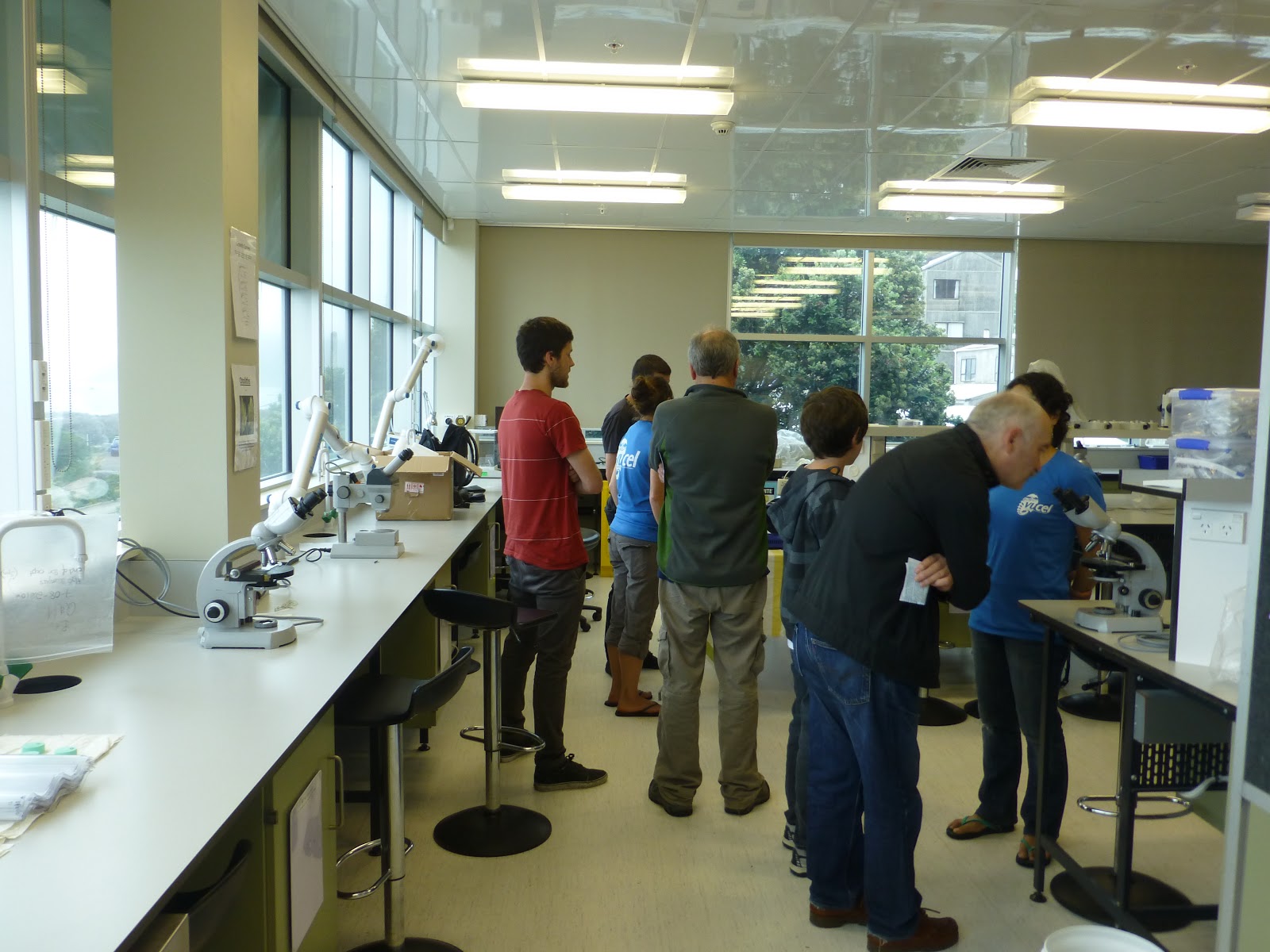
 As part of the SeaWeek NZ the VUCEL opens its doors for 1 day only each year to the public. The idea is to allow the public to see what the students and the Uni does.
 Staff and students were on hand to provide some great insight to the work that goes on and were very keen to answer what ever questions that were asked.


 The Wet Labs as the name implies is where all the “wet research” takes place as well as the staging area for field research which includes diving and boating work.


 The Dry Labs is where a lot of the research activities take place.


  There were a number of information boards giving some very good information about the work that is being carried out on site.

 Also present were some students from the Design and Technology department who were showing off a building machine that was “making a shell’ that had been scanned into a computer.
 The idea show that a shell could be made where a new shell is required. The long term idea is to help make small coral which could be used to regenerate areas that have been lost.


 In the entrance i had the chance to talk to 2 staff from Te Ropu Awhina. It is a on campus Whanau for Maori and Pacific students.
 The aim is to encourage those from the 2 groups to take up either Science, Engineering, Design or Engineering.It is felt that there is not enough people from these 2 groups in these professions, so they go out and visit schools highlighting what is out there and to offer them support.
 It was established at Vic Uni at Wellington in 1999.

 A Brief History: *

  The VUCEL’s Maori Name is Te Toka Tu Moana which means “the surf-beaten rock that stands firm in the ocean”
 VUCEL began in the 1920″s when it was proposed by Vic Uni to have a lab on the South Coast near Wellington
 The 1st VUW Marine Lab was at Island Bay from the 1960’s until 2007.
 The new building was designed as a state of the art which includes features like reclaimed rainwater for the toilets,irrigation and boat washing.
 The “ribs” at the entrance were made from recycled timber from the previous building. Also the entrance is guarded by a carved Kaitiaki.


 Much of the active research programmes cover the life histories of NZ organisms, the effects of marine and other coastal restoration and the effects of terrestrial run off,disturbance and climate change change on coastal ecosystems.

 The Building is located at 396 The Espanade Island Bay. This between Island Bay and Owhio Bay. The Taputeranga Marine Reserve is also located along the stretch of coast.

 The view from the 2nd floor is what every office should have.


* Information is a selection taken from the brouchers from the open day.The links below will show the full information avaialble.

Seaweek Main Web Page

Seaweek Facebook Page

Coastal Ecolgy Twiter

Vic Uni Coastal Ecology Lab Web Page

Awahina page on Vic Uni site

Friends of Taputeranga Reserve

james.wildbaynz/windyhillflyingclub
Artists in Action: Arts Trail on the Miramar Peninsula

Cover photo


 The Miramar Peninsula Arts Trails is a year round self guided tour that covers over 20 galleries and artists. But for one weekend they will all be open and this year (2013) the weekend is the 9/10th March. Also there will be many additional Pop-Up exhibits and other artists.

The Miramar Peninsula is home to some of Wellington’s most talented artists and although you would visit each over time but if time is limited then the weekend is a good chance to see them all.Maps and tickets for the trail can be picked up from a number of different places. Check the Web page or FaceBook page for details
Your ticket includes the chance to win an artwork from one of the participating artists when you visit at least 10 studios.

Miramar Peninsula Arts Trail Wellington FB Page

Miramar Peninsula Art Trail Web Page

Info used taken from either the FB page or Web Page

Cover photo

james/wildbaynz/windyhillflyingclub